Success Story

From Budget Spreadsheet to Rolling Forecast: How Canlak Coatings Took Microsoft Fabric Planning into Production

under
4 weeks
1 Model
Same Capacity
Rolling Forecast
Canlak Coatings runs a product-level rolling sales forecast in production on Microsoft Fabric Planning, live in under four weeks.
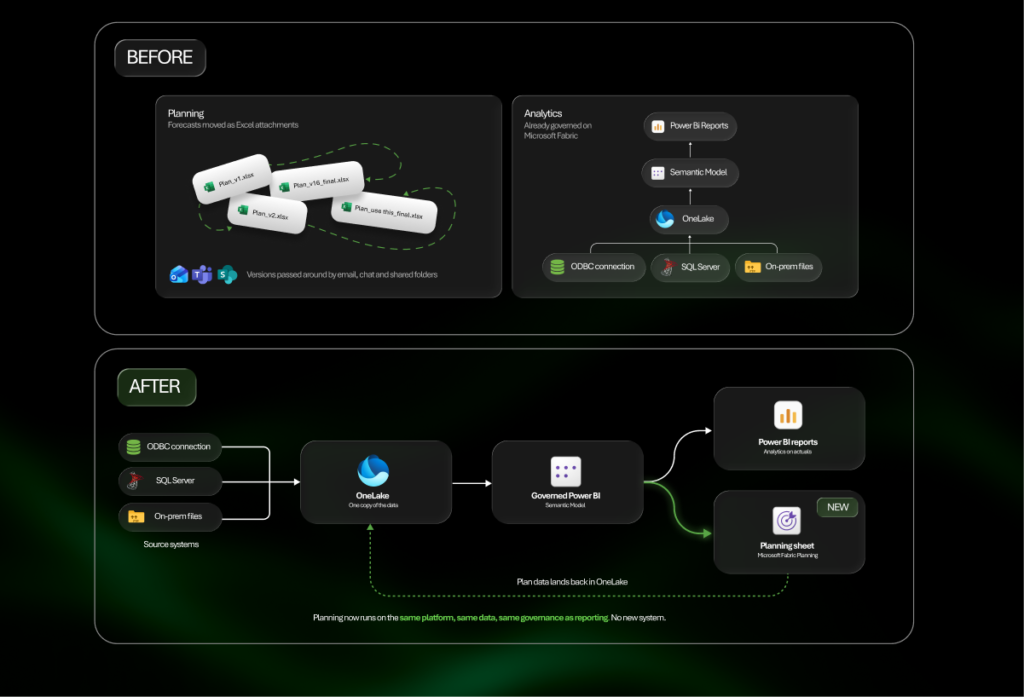
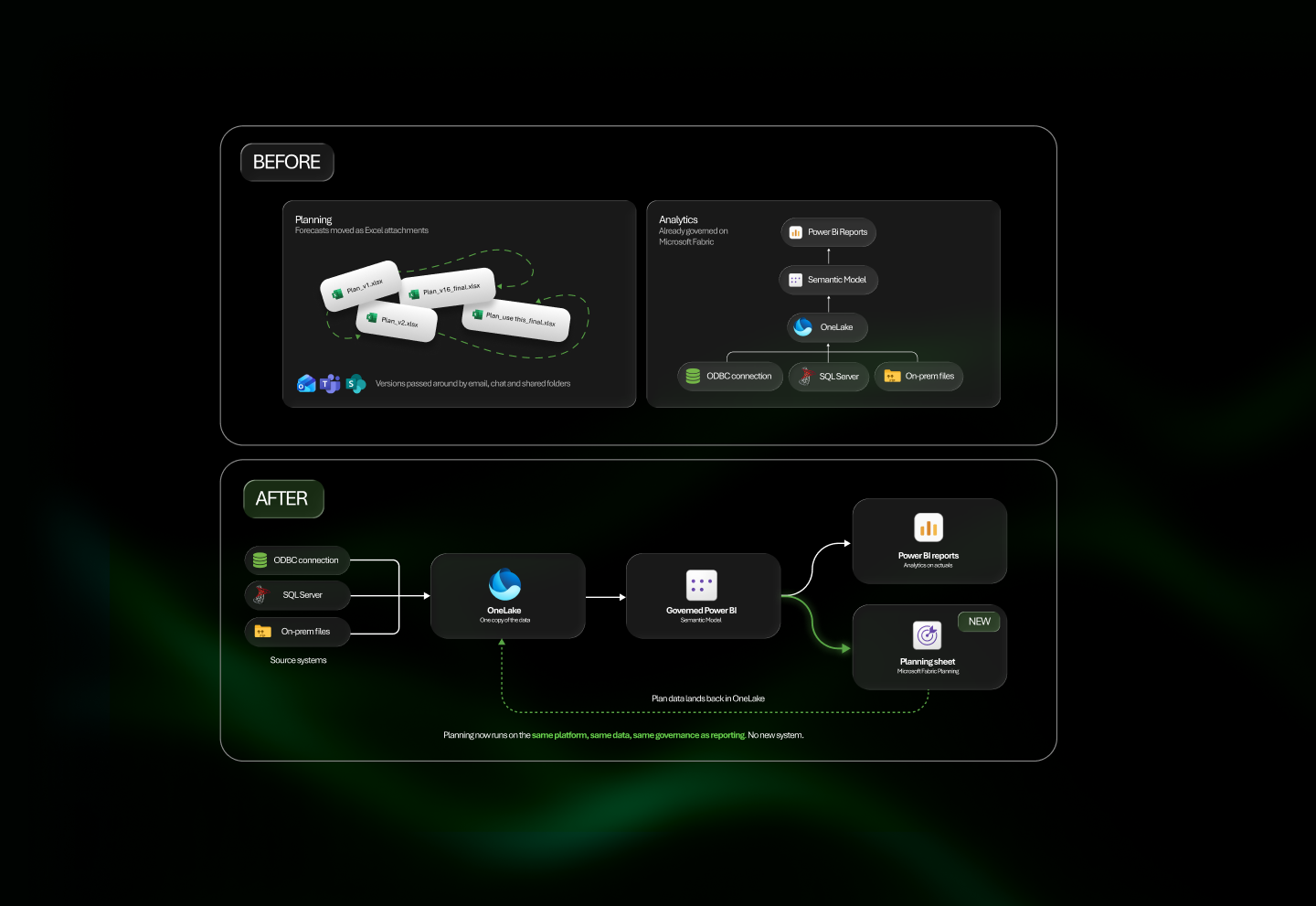
Canlak had already made Microsoft Fabric the daily foundation of its business, with reporting running on a governed Power BI semantic model for close to two years. That head start is what made the next move quick. The company was adding a capability to a platform it already trusted, on data it had already governed.
Canlak Coatings is a North American manufacturer of wood coatings, serving customer across multiple markets. Its first Fabric story described how the company created an a alytics foundation across several ERP systems. This is the story of what that foundation made possible next.
The forecast a spreadsheet could support, but only so far
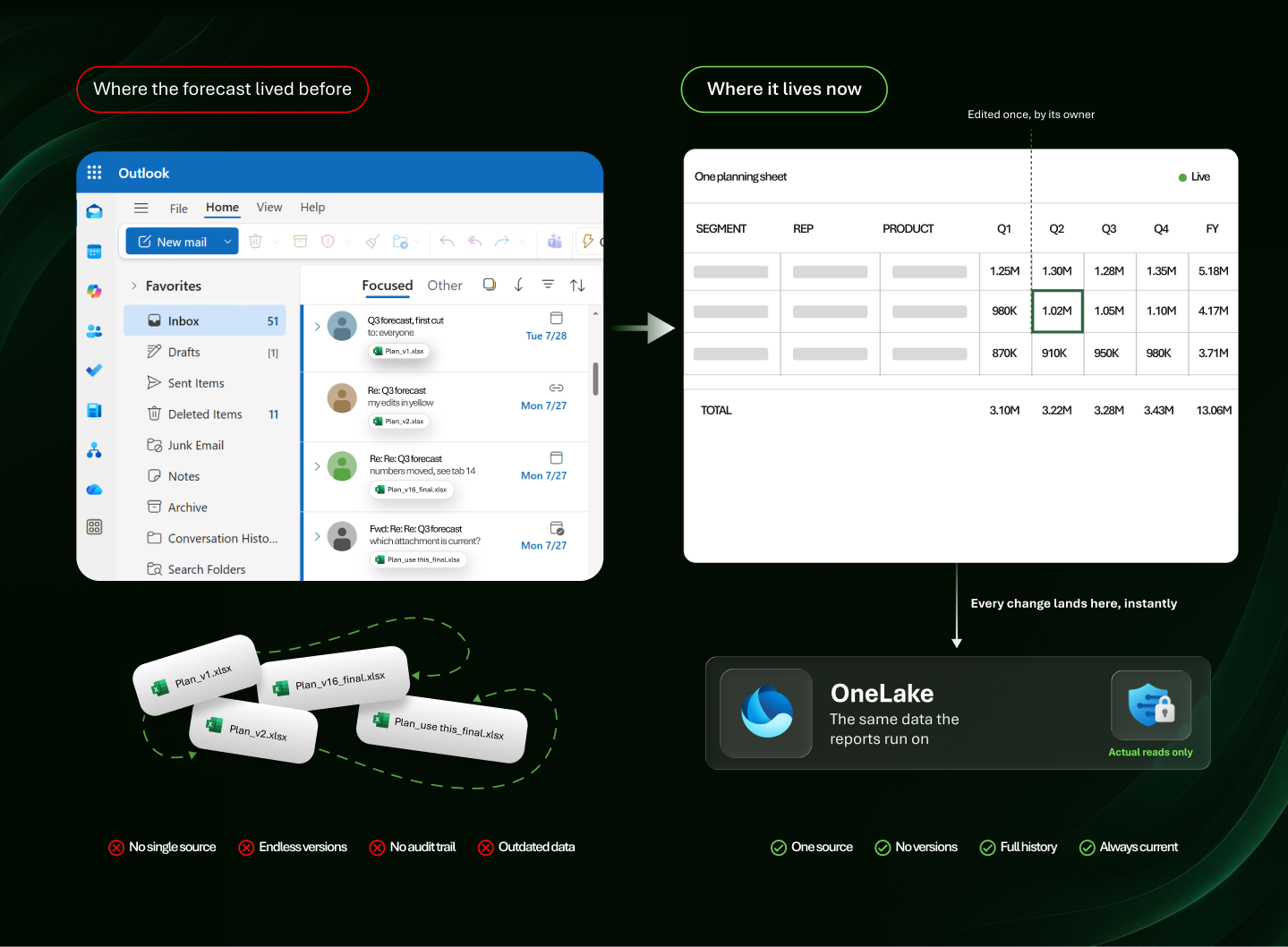
Why Canlak chose to plan where its data already lived
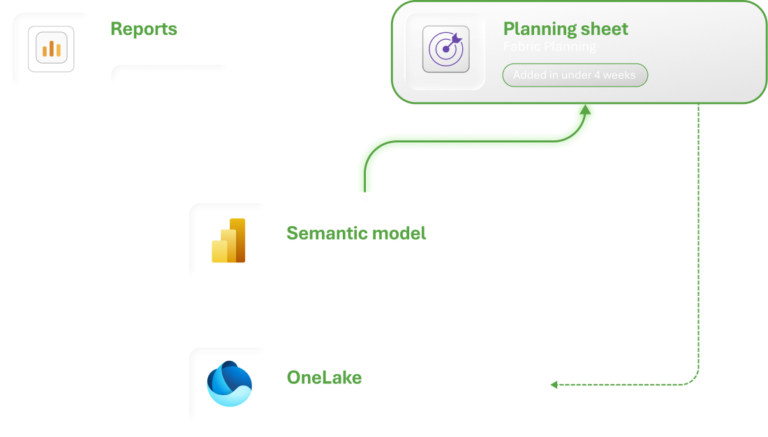
Under four weeks from kickoff to a working forecast
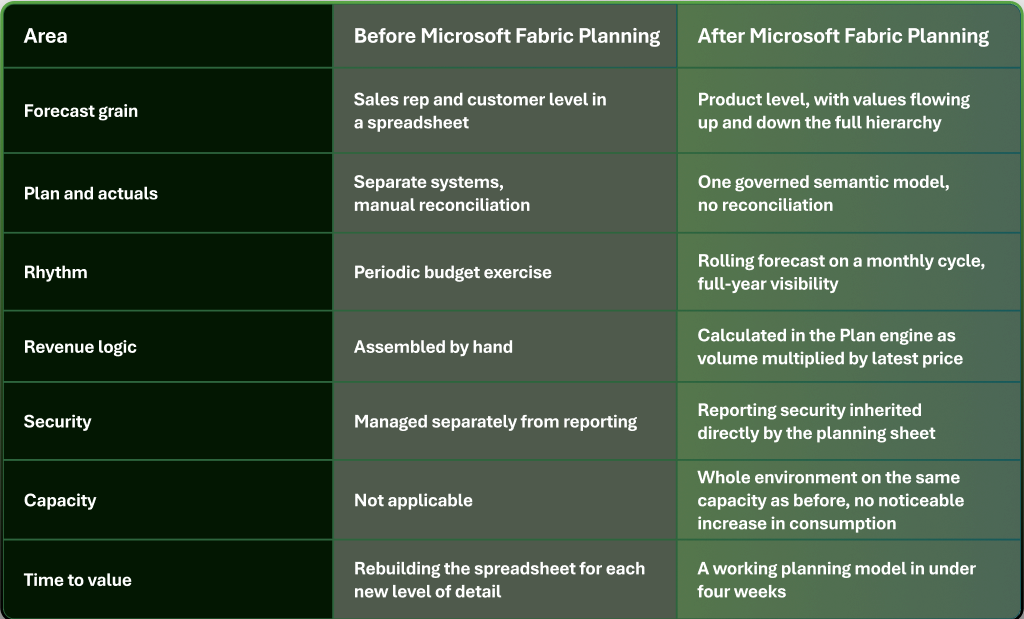
- Organised by sales rep, cascading through the hierarchy. Segment, sales rep, customer, product. A figure entered at any level splashes up or down the hierarchy, so a product-level change flows into the customer and rep totals, and a total entered higher up distributes across the products beneath it.
- Volume driven. The forecast is entered as volume, and the Plan engine calculates revenue as volume multiplied by the latest price.
- Adjustable inputs, protected actuals. Both volume and price can be adjusted as the forecast evolves. Plan data writes back to a SQL database within Fabric, so the forecast never leaves the environment where the data already lives, and actuals remain governed and read only.
- Security carried across. Row-level security from the semantic model applies in the planning sheet, so each sales rep works within the same boundaries that already apply in reporting.
The model spans five segments, two currencies, and more than forty sales reps, and it runs in the Canada Central region. Working in preview meant the occasional rough edge, as expected. One gap in how a feature filtered data was raised with the product team, and a fix is on its way to a future release. None of it held up the forecast, which went into production ahead of general availability.
Type once. Every level follows.
at product-level detail, this reconciliation is what a spreadsheet could not hold
A Rolling Forecast in Production, on the Same Capacity
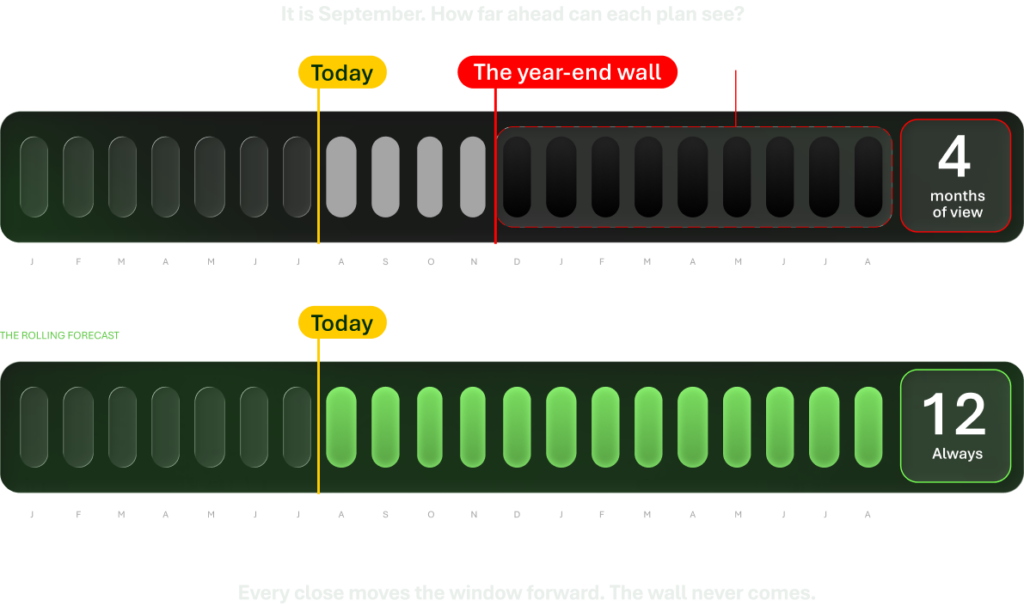
Across finance, users enter forecast figures directly in planning sheets. The forecast cycle runs monthly, and full-year visibility is maintained as each cycle closes. What was a periodic budget exercise is now a rolling forecast that moves with the business.

“Moving from Excel spreadsheets to Fabric Planning transformed our forecasting process. What used to take three to four weeks of spreadsheets, emails, meetings and reconciliations can now be completed in about a week. By bringing planning and reporting into a single platform, we’ve simplified the process into a rolling forecast, improved visibility and given our team more time to focus on analysis rather than administration.”
Rich Zielinski,
Director of Finance and Treasury, Canlak Coatings
The efficiency of the approach shows in the capacity numbers. Canlak’s whole Fabric environment, the reporting the business depends on daily and now the planning workload, runs on the same capacity the business was already using, and adding Fabric Planning has produced no noticeable increase in consumption since the forecast went live. Enterprise planning, at a level of detail a spreadsheet could not hold, across forty sales reps and two currencies, without a step change in platform cost. How the foundation was designed is what keeps the cost flat as more runs on it.
Canlak’s first case study made the point that questions about whether Fabric is production ready were, in the company’s experience, largely theoretical. With Fabric Planning, Canlak makes the same point again, this time earlier in the product’s life.
What Canlak gained
- A rolling sales forecast in production, live ahead of general availability
- Forecast granularity down to the product level, cascading from segment to sales rep to customer to product
- Plan and actuals on one governed semantic model, with no reconciliation between systems
- Reporting security inherited by the planning layer, with no duplicate rules to maintain
- Full-year forecast visibility refreshed on a monthly cycle
- A working planning model in under four weeks, with no noticeable increase in capacity consumption
Why it worked
Four things carried the project:
- A proven foundation first. Almost two years of Fabric in production meant the semantic model, governance, and team habits were already in place. Planning was an addition, not a change of course.
- Ownership close to the work. Hands-on testing and iteration from Canlak’s team, led by Rich Zielinski, kept the model honest against how sales and finance operate.
- A design that matches the business. Volume driven, price aware, and organised by sales rep. The forecast mirrors how Canlak sells.
-
Preview adoption as a strategy. Standing the model up during preview, with any rough edges raised as they appeared, turned launch day into a quiet one.
Technologies Used
What's next
Throughout, Canlak partnered with Data Crafters to design and implement the planning model, extending an analytics environment that has supported the business in production for close to two years.
With the sales forecast in production, the same pattern is available for whatever Canlak plans next. The natural direction is deeper financial planning on the same governed model, extending the forecast beyond sales into the wider finance function. Each addition sits on the model that already exists, which is what has carried the company from daily reporting, to daily operational insight, and now to forward-looking planning, all on one platform.
Early adoption, on a proven foundation
Canlak’s experience shows what early, committed adoption looks like when it rests on a working foundation rather than enthusiasm alone. By the time Microsoft Fabric Planning reached general availability, Canlak was already running its sales forecast on it in production.
There is a wider lesson here for finance and data teams whose forecasts stop short of the detail the business needs.
The distance between a governed reporting platform and a governed planning process is shorter than it looks. When the data foundation, the semantic model, and the security are already in place, planning is the next step rather than the next project. The forecast is no longer a set of rules living in a spreadsheet and in people’s heads. It is encoded on the same model that runs the business, which is what makes it dependable today and extendable tomorrow.