Success Stories
How a Leading Global Energy Services Provider
Unified Its Data Estate with Microsoft Fabric
A leading energy services provider to national and international oil and gas companies set out to simplify a complex data environment and build a unified estate in Microsoft Fabric to support growth. The company manufactures and distributes products that enable the extraction of oil and gas, and needed a modern, governed architecture to scale analytics and AI.
As the organization accelerated its growth and data needs became more advanced, the company identified an opportunity to enhance its multilayered architecture to better support advanced analytics and enterprise-wide visibility.
Key Insights
Challenge: A Fragmented, Multi-Layered Data Architecture
As the company expanded, its data estate naturally evolved across multiple Microsoft technologies, each delivering value for specific functions and business units. Over time, this created a multi-layered architecture that reflected years of growth and operational scale.
Before adopting Microsoft Fabric, the organization used a pipeline where data moved from Dynamics 365 into Azure Data Lake, then through Synapse Analytics and Azure SQL before reaching Power BI. This approach had supported the business effectively for many years, but as data volumes increased and analytics matured, the multi-step flow required more effort to maintain and govern essentially creating technical debt and more points of failure.
The architecture worked, but it was no longer fully aligned with the organization’s vision for real-time analytics, reduced complexity, and AI readiness. Leadership recognized an opportunity to modernize the estate and create a more unified, efficient path from source data to insight.
Key operational challenges included:
- Duplicated data flows increasing maintenance overhead
- Inconsistent performance across business units and regions
- Limited visibility into data lineage and pipeline health
- Manual governance processes requiring constant monitoring
Solution: A Unified Data Estate Built on Microsoft Fabric
To address these challenges and achieve future vision, Mike Glanders, Global Applications Director, decided to implement Microsoft Fabric as the unified foundation for its enterprise data.
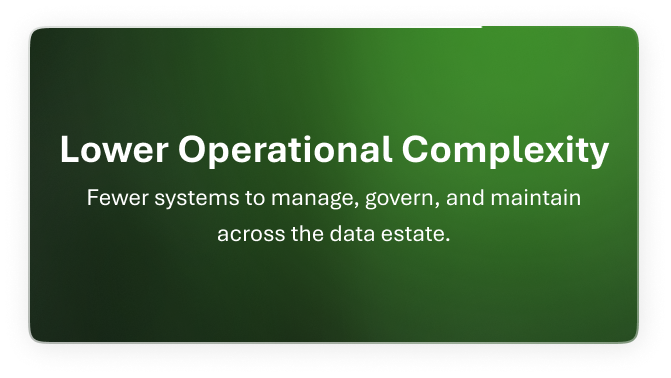
The transition also introduced an opportunity for significant cost efficiencies, reducing the need for multiple overlapping systems.
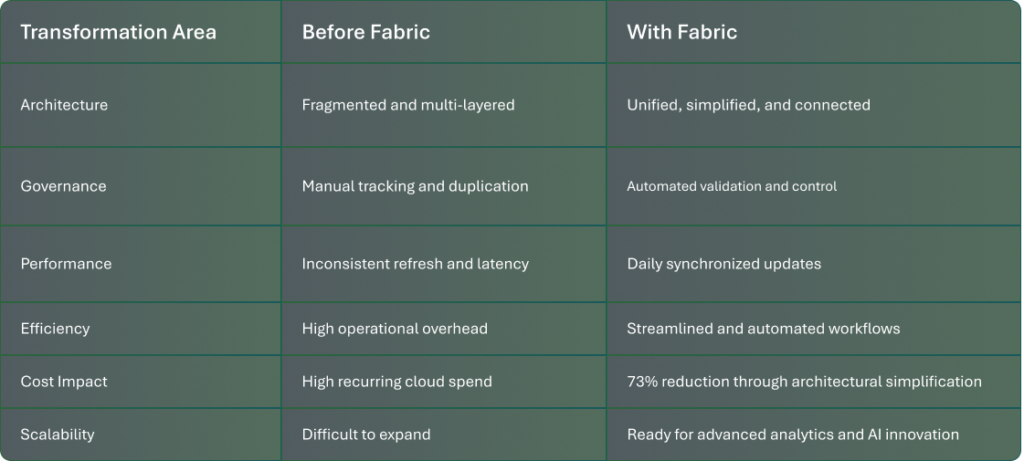
Fabric connected the organization’s key data sources in a secure, scalable and sustainable platform of Fabric OneLake. This new architecture streamlined data pipelines, simplified governance, and reduced duplication while establishing the groundwork for continuous innovation.
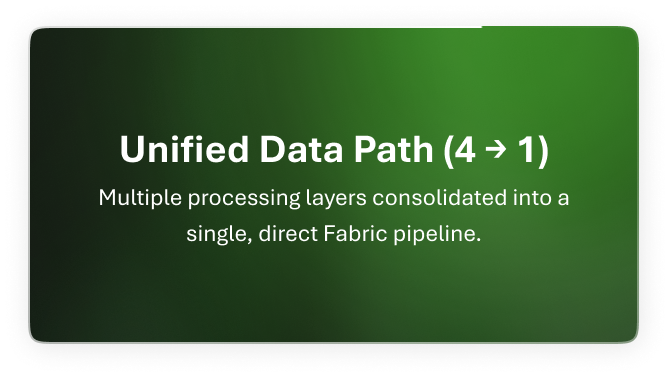
By transitioning to Fabric, the architecture was reduced to a single, direct path: Dynamics 365 → OneLake → Power BI.
Architecture Diagram
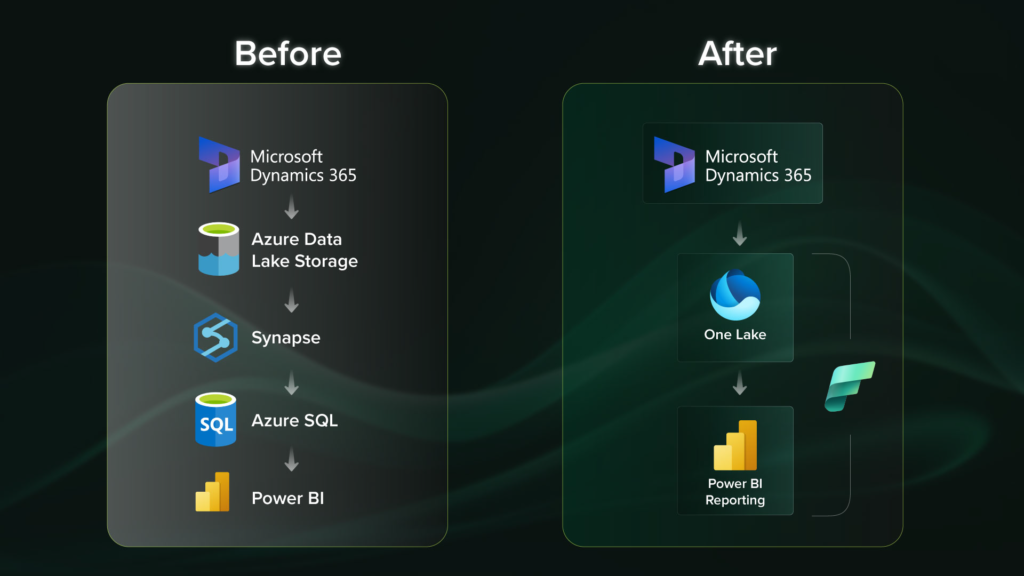
This streamlined path reduces intermediate layers, shortens refresh cycles, minimizes risk of errors, and improves pipeline reliability.
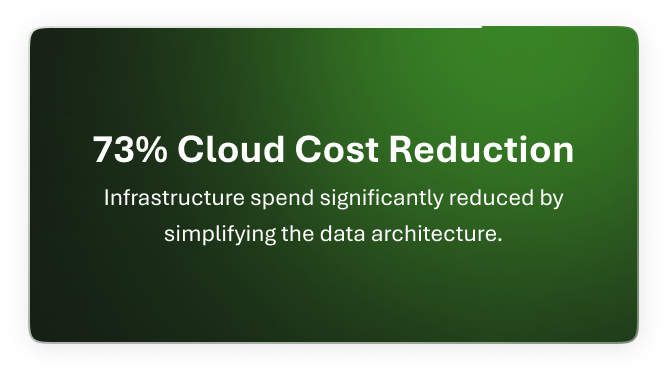
As a natural outcome, the organization achieved a 73% reduction in cloud infrastructure costs, highlighting how simplification drives tangible value while laying the foundation for future analytics and AI.
As Mike Glanders, Global Applications Director, explains:

“The successful implementation of Fabric technology in this project laid the foundation for future advancements in data analytics and AI agents, enabling a scalable and intelligent infrastructure that transforms operational data into actionable insights.”
Mike Glanders
Global Applications Director

Impact: A Unified Foundation for Insight, Efficiency, and Growth
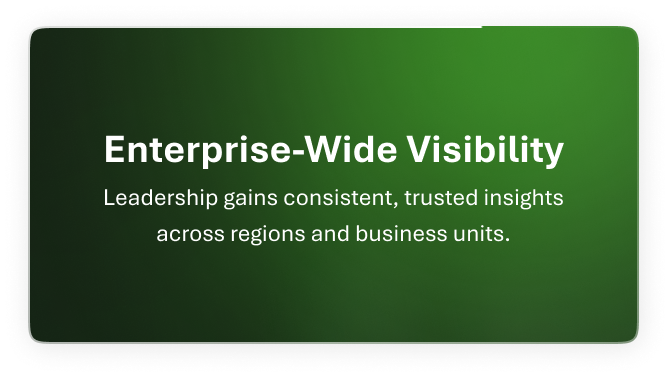
- Reduced duplication and improved visibility
- Automated governance
- Faster, consistent refreshes
- Stronger compliance
- Operational efficiency
These operational improvements, combined with cost efficiency, position the company for scalable growth and future-ready analytics. The financial impact was immediate and substantial, freeing budget previously tied up in infrastructure maintenance and pipeline operations.
Why It Worked
What’s Next: Scaling an Intelligent Future
With its data unified in Microsoft Fabric, the company is now exploring next-phase initiatives including version control, deployment automation, and AI-driven insights.
The unified data estate not only strengthens today’s decision-making but also serves as a foundation for tomorrow’s growth. As the energy sector continues to evolve, the company is positioned to move faster, operate smarter, and lead with data-driven intelligence.
From Disconnected Systems to a Unified Data Foundation
This transformation demonstrates how energy and manufacturing companies in the oil and gas industry can modernize their operations by unifying data with Microsoft Fabric, improving agility, governance, and performance while building a foundation for future innovation.
If your organization still manages data across disconnected systems, now is the time to modernize.
Ready to Unify Your Data Estate?

Connect with us to explore what this could look like for your organization.